Popular Posts

Like us on Facebook

What’s Hot

Google Denies Monitoring Accord With Israeli Government

Google Denies Monitoring Accord With Israeli Government


Internet giant Google on Monday denied a report from Israel's foreign ministry that it has reached an agreement with the government to jointly monitor YouTube videos inciting attacks.
The ministry last week said that Google, which owns YouTube, had agreed a joint mechanism to monitor online materials - including videos encouraging attacks on Israelis - after a meeting betweenGoogle executives and the Israeli Deputy Foreign Minister Tzipi Hotovely.
But the firm said no such agreement had been struck.
A Google spokesman told AFP the meeting, in which Hotovely met Google's senior counsel for public policy, Juniper Downs, and YouTube chief executive Susan Wojcicki, was just "one of many that we have with policymakers from different countries to explain our policies on controversial content, flagging and removals".
"The Israeli ministry for foreign affairs has corrected its original announcement which, in error, suggested there had been an agreement with Google to establish a mechanism to monitor online materials," he added.
Foreign ministry spokesperson Emmanuel Nahshon confirmed a statement on their website had been changed but said Israel was still "extremely grateful for the good relations with Google".
"Our common objective is to remove dangerous incitement to violence on social media. We have full confidence in the Google teams dealing with this removal."
'Online incitement'Israel has been hit by a wave of stabbing, shooting and car ramming attacks by Palestinians since October 1, with 17 Israelis killed.
101 Palestinians, including an Arab Israeli, have also died, over half of them alleged attackers.
The Israeli government has repeatedly pointed to online incitement as a cause for the attacks, with videos and posts lionising the assailants being widely shared.
Prime Minister Benjamin Netanyahu has called on Google, Facebook and Twitter to do more to monitor and remove such material.
The Internet firms have defended their policies, saying they have sufficient protection against online incitement and rejecting perceptions of political interference.
"We rely on the YouTube Community to flag videos that they think violate our Community Guidelines," the spokesperson for Google said.
"Video flagged on YouTube is reviewed 24 hours a day and, if material violates our policies, it is removed quickly."
The foreign ministry has also announced a new office to monitor and flag inflammatory media online.
The body, which will begin operation early next year, seeks to highlight provocative materials in real time.
Last month, an Israeli NGO launched a lawsuit against Facebook over allegedly failing to remove pages that encouraged the killing of Jews.

KickassTorrents User Warned By Court: “Stop Uploading Torrents or Pay Fine”

Being a prolific Torrent uploader can earn you quite a reputation on Torrent websites. However, uploading pirated content can sometimes earn you a call from a court and some serious warning.
In a similar development, a Dutch judge has warned a KickassTorrents user who uploaded more than 750 pirated files. The court warned the user to cease his activities, or face thousands of Euros in fine. However, the court has allowed him to escape more serious punishment.
The case was filed by a local anti-piracy group BREIN, which monitors and takes such actions against popular Torrent uploader who are indulged in piracy. This group is backed by Hollywood and looks to protect the rights of original content makers.
TorrentFreak states: “BREIN argued that the man’s infringing activities were causing irreparable damage for the various copyright holders involved. In addition, his efforts help frustrate the growth of legal services such as Spotify and Netflix.”
This recent case was filed against a 20-year-old student who uploaded Torrents including a full season of The Walking Dead and the film Avengers: Age of Ultron, both with Dutch subtitles.
The user was allowed to go unpunished with the condition that he will delete the existing torrents, stop adding new one, and delete his KickassTorrents account.
As for now, the user with undisclosed identity, has deleted his Torrent account along with all his uploads.

NSA to Shut Down Bulk Phone Surveillance Programme by Sunday


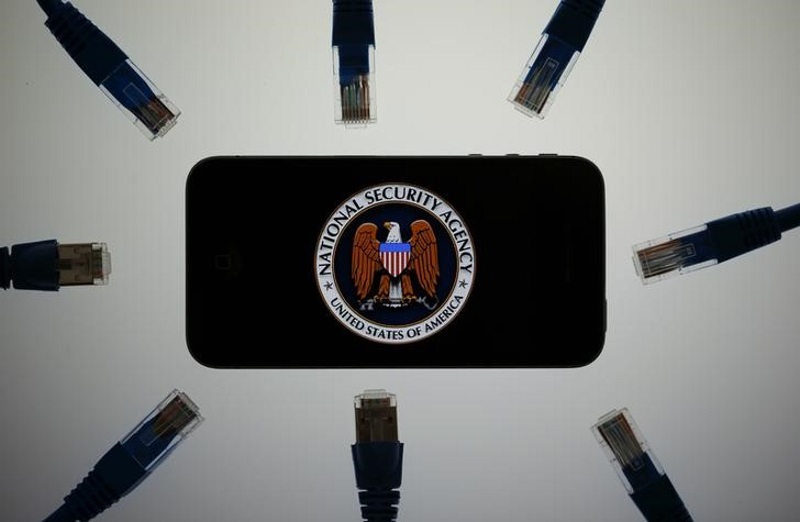
The US National Security Agency will end its daily vacuuming of millions of Americans' phone records by Sunday and replace the practice with more tightly targeted surveillance methods, the Obama administration said on Friday.
As required by law, the NSA will end its wide-ranging surveillance programme by 11:59pm EST Saturday (4:59am GMT Sunday or 10:29am IST) and expects to have the new, scaled-back system in place by then, the White House said.
The transition is a long-awaited victory for privacy advocates and tech companies wary of broad government surveillance at a time when national security concerns are heightened in the wake of the Paris attacks earlier this month.
It comes two and a half years after the controversial programme was exposed by former NSAcontractor Edward Snowden. The move, mandated by a law passed six months ago, represents the greatest reduction of US spying capabilities since they expanded dramatically after the September 11, 2001 attacks.
Under the Freedom Act, the NSA and law enforcement agencies can no longer collect telephone calling records in bulk in an effort to sniff out suspicious activity. Such records, known as "metadata," reveal which numbers Americans are calling and what time they place those calls, but not the content of the conversations.
Instead analysts must now get a court order to ask telecommunications companies like Verizon Communications to enable monitoring of call records of specific people or groups for up to six months.
"The act struck a reasonable compromise which allows us to continue to protect the country while implementing various reforms," National Security Council spokesman Ned Price said.
Some Republican lawmakers want to preserve bulk collection until 2017, citing the Nov. 13 Paris attacks in which 130 people died. The Islamic State has claimed responsibility for the killings.
But any new surveillance measures are unlikely to become law ahead of the November 2016 presidential elections.
A presidential review committee concluded the surveillance regime did not lead to a single clear counterterrorism breakthrough that could be directly attributed to the programme.
Metadata collected by the NSA over the past five years will be preserved for "data integrity purposes" through February 29, the White House said.
After that the NSA will purge all of its historic records once pending litigation is resolved.

Yahoo Mail Stops Users With Ad Blockers From Accessing the Service

Yahoo Mail Stops Users With Ad Blockers From Accessing the Service


Yahoo is blocking some users with ad-blocking extensions installed on their Web browsers from accessing Yahoo Mail. Few users took to Adblock Plus' message board to report this issue. They noted that they were unable to access Yahoo Mail using Google Chrome or Mozilla Firefox if the browser had the ad-blocking extension installed. A Yahoo spokesperson has confirmed that the company is indeed testing this feature.
Users are being asked to disable ad-blocking software to continue using Yahoo Mail. Among several users who noticed this issue on Yahoo Mail is Andrei Herasimchuk, former Senior Director of Product Design at Yahoo, who once worked on Mail. Miffed by Yahoo's move, he said he is going to quit Yahoo Mail and switch to Apple Mail. "It was a good run, I guess. Goodbye! Hello Apple Mail, as much as I hate it," he tweeted.
As the debate around the use of ad-blocking software continues, most recently brought into the spotlight with support for such apps in Apple's iOS 9 mobile operating system, many publishers and networks are exploring different options to mitigate revenue loss that these ad-blocking technologies are imposing. A spokesperson of Yahoo confirmed to Engadget that the company is indeed testing this feature.
"At Yahoo, we are continually developing and testing new product experiences. This is a test we're running for a small number of Yahoo Mail users in the US." The move comes as Yahoo's advertising revenue continues to dwindle. The company recently partnered with Google for advertising and search.
If you're also facing this issue, you might want to disable your ad-blocker app to regain access to Yahoo Mail. Alternatively, you can use a different email client such as Microsoft's Outlook.

Free Basics by Facebook Now Available Nationwide via Reliance Communications

Free Basics by Facebook Now Available Nationwide via Reliance Communications


Keeping up with its promise to make Internet free for those who cannot afford it in India, social networking giant Facebook has chosen Reliance Communications Network to offer Free Basics - its free Internet sharing platform - now to everyone in the country.
"We just took another step towards connecting India. As of today, everyone in India nationwide can access free Internet services for health, education, jobs and communication through Internet.org's Free Basics app on the Reliance network," wrote Facebook CEO Mark Zuckerberg in a post on Monday.
In his post, Zuckerberg also said how Free Basics app has helped Ganesh Nimbalkar, a farmer in Maharashtra, not only double his crop yield but also get a better deal for them.
"Ganesh struggled with traditional farming methods in a region plagued by droughts, but last year he started using Free Basics - accessing services like AccuWeather, which helped him work better through the monsoon season, and Reuters Market Light, which helped him understand commodity prices and get a better deal for his crops," Zuckerberg wrote.
"By using Free Basics, Ganesh has doubled his crop yield, eradicated insect infestations and even invested in new crops and livestock," he further posted.
In February, the app was available in India for Reliance customers in six states - Tamil Nadu, Mahararashtra, Andhra Pradesh, Gujarat, Kerala, and Telangana.
However, with the recent announcement, Reliance customers all across the country will now have access to Free Basics.
Facebook rebranded Internet.org app - which it developed in conjunction with Reliance Communications - as "Free Basics by Facebook" in September this year.
"Today, nearly one billion people are currently without Internet access in India. Now with Internet.org'sFree Basics available to everyone in India, many more people like Ganesh and his wife Bharati will have access to the information and opportunity the Internet brings," the Facebook founder posted.
During his India visit in October, Zuckerberg has reinstated that the world cannot be connected without India.
"It is very important to connect people in India (one of the largest democracies) as it is central to our plans of connecting the next billion people and then the whole world," Zuckerberg had said at the townhall meeting held at the Indian Institute of Technology (IIT) Delhi.
"India is one of those countries which you cannot overlook if you want to connect the world," he added.
Asked about Net neutrality and Internet.org, Zuckerberg said the platform via its Free Basics platform aims to solve three problems of connecting to the Internet - availability, affordability and awareness.
He said that "Free Basics programme under the Internet.org initiative aims to connect the next billion people. It does not intend to harm anyone - neither the consumers nor the operators".
He reiterated India's importance as a market for Facebook and said that nearly 250 million of the targeted next billion will come from India.
"India is home to the third largest Internet user population (300 million) in the world, yet paradoxically, it also hosts the largest unconnected population (one billion) to the Internet," Zuckerberg said.
He highlighted that nearly 15 million people have access to Internet as a result of Facebook's efforts in 24 nations.
"Free Basics by Facebook" provides people with access to websites of useful services like news, employment, health, education and local information on their mobile phones for free in markets where Internet access may be less affordable.

Facebook Now Using Google App Indexing To Drive Visitors From Search Into Its App

Facebook Now Using Google App Indexing To Drive Visitors From Search Into Its App


Facebook has long opened up some of its walled garden to Google, in order to gain Google traffic. Now Facebook is stepping up its search engine optimization game by implementing Google App Indexing to ensure it continues to get that traffic as the shift to mobile continues.

Facebook Loves Google Traffic

Facebook has allowed Google to index some of its content going back to at least 2007, when Facebook profile pages were opened up to Google and other search engines. “Indexing” means that Google can read all the content on these pages. In turn, when people search, these pages might appear in Google’s search results.
This indexing — known so well to search engine optimization (SEO) professionals — has benefits to both Google and Facebook. Google has more content that might satisfy what people are searching for. Facebook gets traffic from Google for free.
Over time, Facebook has opened up more of the content is has to Google, such as Facebook Comments in 2011. The news today about Google App Indexing support doesn’t add more content but is aimed to ensure that those finding existing content from Facebook within Google have a better mobile experience.

App Indexing Means Loading Facebook, Not The Browser

The Wall Street Journal broke the news on this today, saying that Facebook began allowing Google App Indexing as of Friday, according to Google. Facebook also confirmed the same directly to Search Engine Land.
With Google App Indexing, Google is able to jump people from a web page listing directly into a publisher’s app, where the same content loads.
In the case of Facebook, this means that when someone clicks on a Facebook listing in Google search, rather than load a web page with that content, in some cases Google instead understands how to open up the Facebook app and load the same content within that.
This only happens for that content that Facebook has already opened up to Google, such as public profiles, Facebook pages, groups and events (assuming they haven’t themselves been blocked by Facebook account holders, such as if they are private in nature).
One notable class of pages that haven’t gotten Google App Indexing are personal posts or status updates that are open to the public. Google is able to index these now. They’ll also show up when people do mobile searches on Google. But Facebook hasn’t implemented the Google App Indexing code for them, that I can see, which means they’ll still load in the browser rather than the Facebook app.

App Indexing Doesn’t Gather New Information

Facebook is not providing any new information through app indexing that Google doesn’t already get, Facebook confirmed to me directly. So when the WSJ wrote this, it wasn’t quite right:
Google’s search engine is dominant on the Web, but its computers can’t automatically “crawl” and categorize the information inside apps, where smartphone users spend the majority of their time. So it must persuade app developers to let it peer inside.
In many cases, it’s not that apps contain information that Google can’t index — and most cases, if you’re talking apps from those with major web sites. Apps often pull information from the same source to power both their web sites and apps. Yelp, TripAdvisor and Facebook are examples of publishers like this, where Google knows very well what’s inside their apps because what’s inside their apps is also what’s inside their websites.
Rather, Google App Indexing today is much more about making a better experience for the searcher, jumping them directly into an app instead of a browser, rather than somehow magically finding information that’s only in the app.

Only For Android, Not Apple Or Bing

I can see Google App Indexing code live now, such as on our own Search Engine Land page at Facebook. However, my test searches when using an Android Nexus 6P are not jumping me from Google’s search results into the Facebook app that I have installed, as they should.
I’m checking with Google on this, but chances are Google simply hasn’t updated many of the new Facebook pages to see the new code. When those pages are reindexed over the coming days, this should work.
This only will work for Android. Facebook has not implemented similar mechanisms from Apple or Bing, so mobile searches on iOS (either in Safari or Chrome) or for those using Windows Mobile will not launch the Facebook app. Facebook said it had no comment on why these were omitted.

Why Do It?

Why was it Google confirmed the news of this to the WSJ, rather than Facebook. It’s not like there was any special agreement that needed to be put in place. As it turns out, Google told us it was part of a general discussion about how companies are making use of app indexing.
It is a big win, so to speak, for Google App Indexing. Facebook’s move may encourage more publishers to make use of it, which can mean a better experience for Google’s mobile users.
But it’s also right in line with SEO best practices. That is, this is exactly what you’d expect any organization to do if they care about SEO. Google has been rewarding apps over the browser within its search result to a degree that, at times, it’s arguably worse for users. But for publishers, it makes plenty of sense to ride the app indexing train, especially for potential ranking boosts.
As for Facebook, it told us that it implemented Google App Indexing as part of a desire to improve the experience for those who use its app.

EU Plans Crackdown on Bitcoin to Curb Terrorism Funding

EU Plans Crackdown on Bitcoin to Curb Terrorism Funding


European Union countries plan a crackdown on virtual currencies and anonymous payments made online and via pre-paid cards in a bid to tackle terrorism financing after the Paris attacks, a draft document seen by Reuters said.
EU interior and justice ministers will gather in Brussels on Friday for a crisis meeting called after the Paris carnage of last weekend.
They will urge the European Commission, the EU executive arm, to propose measures to "strengthen controls of non-banking payment methods such as electronic/anonymous payments and virtual currencies and transfers of gold, precious metals, by pre-paid cards," draft conclusions of the meeting said.
Bitcoin is the most common virtual currency and is used as a vehicle for moving money around the world quickly and anonymously via the web without the need for third-party verification.
Electronic anonymous payments can be made also with pre-paid debit cards purchased in stores as gift cards.
EU ministers also plan "to curb more effectively the illicit trade in cultural goods," the draft document said.

Encryption Firm Silent Circle Tightens Access Following Paris Attacks

Encryption Firm Silent Circle Tightens Access Following Paris Attacks

The encrypted communications firm Silent Circle said Thursday it was tightening access to its mobile apps and secure smartphone to make them harder for terrorists and criminals to use.
The company which makes the encrypted Blackphone handset and Silent Phone applications for private messaging said it took the steps after learning that it had been recommended by the Islamic State group which has claimed credit for the deadly attacks in the French capital.
"We are enacting more aggressive back-end payment technology to reduce the likelihood of evildoers like (the Islamic State group) Isis," said Mike Janke, co-founder and chief executive of the company which is headquartered in Switzerland with offices in Washington.
Janke told AFP that he expects this move to curb use of his company's products because criminals and terrorists often use stolen credit cards or fake addresses.
"Since Isis labeled us as the strongest product, we are going to implement what we feel is responsible and morally acceptable procedures to make it harder for the bad element to get our technology," he said.
Janke said Silent Circle's outside payment processor would implement steps "that can detect stolen credit cards, fake address and other black market means of acquiring our Blackphone or software."
At the same time, Janke said the company would resist efforts and laws that would weaken encryption or allow law enforcement access to private data.
"Nobody wants to see their name at the top of an Isis list," he said.
At the same time, he noted that these encryption and private messaging services are vital for government officials, corporations and democracy activists.
"In some parts of the world secure communications literally means the difference between life and death," he said, adding that intelligence agencies, heads of state and major corporations use the company's products.
Janke said Silent Circle stores no customer data and thus cannot be compelled by subpoena to identify its users.
He added that any type of technology may be used for good or evil purposes.
"Whether it's a cricket bat or a car, one percent of the human population will use it for evil," he said.
"You can't penalize the other 99 percent of the world."

'Backdoor to Encryption Won't Stop Terrorists'

'Backdoor to Encryption Won't Stop Terrorists'


There's no evidence the plotters of the Paris terrorist attacks used encrypted communications, but the debate about whether the technology should have a "backdoor" for intelligence services is heating up again. The debate, however, probably will have little effect on terrorist organizations.
Michael Morell, former deputy director of the Central Intelligence Agency, told "60 Minutes" on Sunday that after the public discussion of encryption sparked by Edward Snowden and the privacy concerns he raised, "we're now going to have another debate about that. It's going to be defined by what happened in Paris."
Islamic State has claimed responsibility for the Paris attacks and for the explosion of the Russian airliner over Egypt last month. The group used Telegram, a Russian-designed, Berlin- based secure messenger app, to get out its message. The terrorists appear to prefer this methodto platforms such asFacebook and Twitter, where they are being censored and their accounts blocked.
There's no doubt that terrorist groups use these channels, and probably many other means, such as steganography, or the officially Snowden-approved messenger Signal and other apps with encryption capabilities that make it harder for governments to interfere with the communication. It's worth asking how they are using this software, however.
Propaganda and recruitment require relatively secure channels because IS needs to get its message out without interruption. And for potential Islamic State recruits getting in touch with the group is an important social experience that is made more exciting if some cloak-and-dagger stuff is involved. It's unlikely, however, that any experienced terrorist would assume that such communication channels - almost all developed in Western countries - are safe.
Apple Chief Executive Tim Cook says the encryption now used in his company mobile operating system, iOS, prevents everyone, including Apple itself and government agencies, from accessing user data. "We're not reading your e-mail, we're not reading your iMessages," Cook said on "Charlie Rose" last year. "If the government laid a subpoena on us to get your iMessages, we can't provide it. It's encrypted and we don't have the key."
Such statements aren't all that reassuring to the Islamic State, which last year specifically banned its fighters and officials from using Apple devices.
Smartphones in general are not particularly safe because they have built-in satellite navigation and can be used to locate and eliminate terrorists. Even with navigation turned off, the phones are untrustworthy because they use operating systems from Google and Apple, both flagged by Snowden as participants in the National Security Agency's electronic surveillance programs. US intelligence officials' complaints about the supposed impenetrability of publicly available encryption and the demands for access have been rejected by the administration, but to Islamic State and other terror groups, that's just a suspicious good cop, bad cop routine.
After all, even the encrypted messenger Signal was partly funded by the US government as part of its effort to provide encryption technology to people fighting oppressive regimes. There is no way for the terrorists to know whether a backdoor was built in.
On the morning after the Paris attacks, former White House Press Secretary Dana Perino blamed Snowden for tipping off terrorists about US electronic surveillance. Yet long before Snowden leakedNSA documents, terror groups knew encryption wasn't particularly useful. Al-Qaida was known to use encryption and steganography; according to one story, the Muslim fundamentalists used porn sites to send secret messages. But the Sept. 11 hijackers exchanged unencoded messages on Hotmail, merely substituting the phrase "The faculty of Commerce" for "World Trade Center."
From a terrorist's point of view, truly secure communication is either so routine-looking as to avoid interest - or it is offline. If a group uses a commonly available messaging app, it's likely to get caught, as an alleged Chechen jihadist group did in Belgium last summer.
Whatever communication method the Paris assailants turn out to have used, providing backdoors into commercial encryption probably won't prevent the next attack. Almost all the attackers were known to the authorities, and if they had been watched, their use of encryption programs would have itself invited closer scrutiny. There is, however, no way for intelligence services to watch every suspicious individual all the time, and terrorists will always be able to use that to their advantage.

Soon, Wi-Fi Signals to Power Electronic Devices: Study

Soon, Wi-Fi Signals to Power Electronic Devices: Study


An Indian-origin team of engineers from the University of Washington has developed a novel technology that uses a Wi-Fi router to power devices at home and beyond.
Developed by assistant professor Shyam Gollakota and Vamsi Talla, an electrical engineering doctoral student, the Power Over Wi-Fi (PoWiFi) system is one of the most innovative and game-changing technologies of the year, said Popular Science that included it in the prestigious magazine's annual "Best of What's New" awards announced on November 18.
"For the first time we have shown that you can use Wi-Fi devices to power the sensors in cameras and other devices," lead author Talla said.
"We also made a system that can co-exist as a Wi-Fi router and a power source -- it doesn't degrade the quality of your Wi-Fi signals while it's powering devices," she added.
The technology attracted attention earlier this year when the team published an online paper showing how they harvested energy from Wi-Fi signals to power a simple temperature sensor, a low-resolution grayscale camera and a charger for a Jawbone activity tracking bracelet.
PoWiFi could help enable development of the Internet of Things, where small computing sensors are embedded in everyday objects like cell phones, coffee makers, washing machines, air conditioners and mobile devices - allowing those devices to "talk" to each other.
"In the future, PoWiFi could leverage technology power scaling to further improve the efficiency of the system to enable operation at larger distances and power numerous more sensors and applications,"explained Gollakota, assistant professor of computer science and engineering.
But one major challenge is how to energise those low-power sensors and actuators without needing to plug them into a power source as they become smaller and more numerous.
The team fixed that problem by optimising a router to send out superfluous "power packets" on Wi-Fi channels not currently in use - essentially beefing up the Wi-Fi signal for power delivery - without affecting the quality and speed of data transmission.
The team also developed sensors that can be integrated in devices to harvest the power.
In their proof-of-concept experiments, the team demonstrated that the PoWiFi system could wirelessly power a grayscale, low-power Omnivision VGA camera from 17 feet away, allowing it to store enough energy to capture an image every 35 minutes.
It also re-charged the battery of a Jawbone Up24 wearable fitness tracker from zero to 41 percent in 2.5 hours.
The researchers also tested the PoWiFi system in six homes.
"Users did not notice deterioration in web page loading or video streaming experiences, showing the technology could successfully deliver power via Wi-Fi in real-world conditions without degrading network performance," the authors noted.
The duo will present the final paper next month at the Association for Computing Machinery's CoNEXT 2015 conference in Heidelberg, Germany.

Paris Attacks — NO! We Can't Blame Edward Snowden and Encryption for Terror Attacks

Paris Attacks — NO! We Can't Blame Edward Snowden and Encryption for Terror Attacks


Terrorist groups are increasingly using high-grade, advanced end-to-end encryption technologies so that no law enforcement can catch them.

The deadliest terror attacks in Paris that killed 129 people were the latest example of it.

How did the Terrorists Communicate and Organize the Plot?


The Paris terrorists almost certainly used difficult-to-crack encryption technologies to organize the plot – locking law enforcement out, FBI Director James B. Comey told Congress Wednesday.

The ISIS mastermind behind the Friday's Paris massacre is identified to be Abdelhamid Abaaoud, who is based in Syria. So to transmit his plans to the suicide bombers and gunmen, he would have made use of secure communication to keep law enforcement out.

FBI's Comey believes ISIS is making use of popular social media platforms to reach out to potential recruits and smartphone messaging applications that are end-to-end encrypted, meaning even the company cannot read the messages.

Blame Game: Ex-CIA Director Blames Edward Snowden For Paris Attack


Ex-CIA Director James Woolsey, who once said Snowden "should be hanged by his neck until he is dead," has blamed NSA whistleblower Edward Snowden for revealing the agency's efforts to break encryption and for teaching terrorists how to avoid being caught.

After Paris Attack, Government's arguments about Encryption and Backdoor


Now in the wake of the recent Paris terrorist attacks, the US government has renewed their assault on encryption and revived their efforts to force tech companies to install backdoors in their products, like encrypted messaging apps.


UK to Double Cyber Spending to Prevent Militant Attacks via Web

UK to Double Cyber Spending to Prevent Militant Attacks via Web


Britain will nearly double its spending on cyber-security to prevent Islamic militants from launching online attacks on the country, Chancellor of the Exchequer George Osborne said on Tuesday.
Osborne said Friday's attacks in Paris, which killed more than 130 people and were claimed by Islamic State (ISIL), underscored the need to improve Britain's protections against electronic attack.
"ISIL are already using the Internet for hideous propaganda purposes; for radicalization, for operational planning too," he said in excerpts of a speech he was due to give at Britain's main intelligence-gathering centre.
"They have not been able to use it to kill people yet by attacking our infrastructure through cyber-attack," he said.
"But we know they want it and are doing their best to build it. So when we talk about tackling ISIL, that means tackling their cyber threat as well as the threat of their guns, bombs and knives."
Osborne said public spending on cyber-security would be almost doubled to a total of GBP 1.9 billion over the period to 2020 even as he prepares to announce fresh overall spending cuts next week in a bid to return Britain to a budget surplus by the end of the decade.
"It is right that we choose to invest in our cyber defences even at a time when we must cut other budgets," he said. "The Internet represents a critical axis of potential vulnerability."
Prime Minister David Cameron said on Monday that the size of Britain's intelligence agency staff would be increased by 15 percent.
Osborne said the decision to ramp up cyber defence funding had been taken before Friday's bloodshed in Paris.
"The stakes could hardly be higher - if our electricity supply, or our air traffic control, or our hospitals were successfully attacked online, the impact could be measured not just in terms of economic damage but of lives lost."
A new national cyber-security plan drawn up by the government would feature a dedicated force to ensure faster and more effective responses to major online attacks. The force would be based at Britain's GCHQ eaves-dropping centre in Cheltenham, southwest England, where Osborne was due to speak on Tuesday.
Other elements of the plan included possible cooperation between Internet service providers, with help from the government, to fend off malware attacks and block bad addresses used against British Internet users, as well as a new institute to train coders, Osborne said.
British broadband provider TalkTalk suffered a cyber-attack in October which affected 157,000 customers. This month, Britain and U.S. authorities carried out a drill with leading banks to test their response to a cyber incident in the financial sector.
© Thomson Reuters 2015

Paris Attacks Revive Debate on Encryption, Surveillance

Paris Attacks Revive Debate on Encryption, Surveillance


The deadly Paris attacks have reignited debate on encrypted communications by terror cells and whether law enforcement and intelligence services are "going dark" in the face of new technologies.
The exact means of communication in Friday's strikes were not immediately clear, but media reports have said the Islamic State organization has increasingly turned to encrypted communications and applications to avoid detection.
The latest carnage in France has revived concerns that law enforcement and intelligence lack the ability to tap into new communications technologies, even with appropriate legal authorization.
CIA Director John Brennan, speaking at a Washington forum Monday, warned that some technologies without specifically mentioning encryption "make it exceptionally difficult, both technically as well as legally, for intelligence and security services to have the insight they need to uncover it."
Brennan echoed concerns voiced by leaders of the FBI and National Security Agency that terrorists are using encryption to hide their tracks.
"I think what we're going to learn is that these guys are communicating via these encrypted apps, right, the commercial encryption, which is very difficult, if not impossible, for governments to break," former deputy CIA director Michael Morell told the CBS program "Face the Nation."
New York City Police Commissioner William Bratton echoed those concerns, saying his department is often frustrated by encryption which has increased with new smartphones powered by Apple and Google software that provides only the users with keys to unlock data.
"We're encountering that all the time," Bratton told broadcaster MSNBC Monday.
"We have a huge operation in New York City working closely with the Joint Terrorism Task Force and we encounter that frequently. We are monitoring (suspects) and they go dark. They are going onto an encrypted app, they are going onto sites that we cannot access. The technology has been purposely designed by our manufacturers so that even they cannot get into their own devices."
So far, the major US technology companies have spurned appeals from officials to enable access for key investigations and have stepped up encryption efforts following the 2013 leaks about vastsurveillance capabilities of the US National Security Agency.
'Game changing'
But in light of the bloodletting in France, the debate may change, observers say.
"Evidence that terrorists were, in fact, using strong end-to-end encryption to kill people could be game-changing in a debate that has heretofore been defined by anxieties about NSA," said Benjamin Wittes, a Brookings Institution fellow who edits the blog Lawfare.
"The tech companies won the first round of the current encryption battles in large measure because the concerns the intelligence and law enforcement community have about 'going dark,' while acutely real to them, are pretty hypothetical on public evidence," he added.
"All that could change in an instant were it to emerge that the Paris attackers were using technology specifically chosen to secure their communications from those charged with stopping terrorist attacks."
Steve Vladeck, an American University law professor and editor of the Just Security blog, said there will be renewed debate on surveillance and encryption in the wake of the Paris attacks.
"I don't think we know nearly enough yet to assess whether anything about the Paris attacks ought to tilt the scales in the ongoing debate over encryption," he said.
"The most immediate focus of post-Paris discussions of national security law and policy reform is going to be surveillance, with a special focus on encryption and back doors."
But many technology experts and civil liberties activists say allowing special access to law enforcement would weaken online security overall and could mean activists, journalists and people living under authoritarian regimes would lack the ability to freely communicate.
Good guys, bad guys
"We've never been able to create a 'back door' that can discriminate between good guys and bad guys," said Joseph Hall at the digital rights group Center for Democracy & Technology.
Creating special access "would mean engineering vulnerabilities" into these systems, Hall told AFP.
Mark Rotenberg, president of the Electronic Privacy Information Center, said that "there is no evidence so far that encryption thwarted an investigation" into the Paris attackers.
"It may well be that it was a failure of human intelligence."
Bruce Schneier, a cryptographer who is a fellow at the Harvard Berkman Center for Internet and Society and chief technology officer at the security firm Resilient Systems, said the Paris attacks may be used "to scare people" to weaken encryption.
Schneier said leaked emails from September suggest that the US administration would seek to use a terror attack to get more public support for surveillance.
"They are going to use this to convince people we need back doors," he told AFP.
"It might change the debate because people are scared."